How Membership Ladders in Digital Gaming Apps Facilitate Expanded Free Spin Opportunities
Avery Schulz · Aug 3, 2026
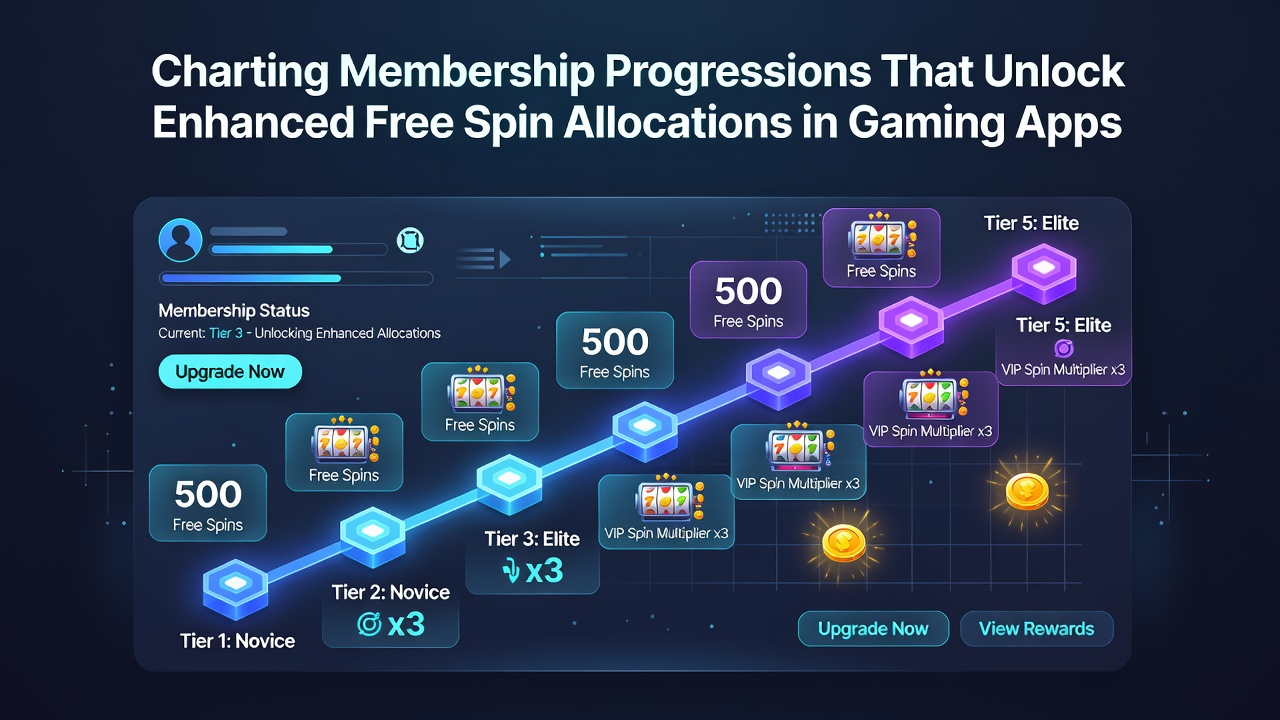
How Membership Ladders in Digital Gaming Apps Facilitate Expanded Free Spin Opportunities
Digital gaming applications have developed structured membership systems that track player activity and convert accumulated points into tiered status levels, each of which grants progressively larger free spin allocations on slot-style games. These ladders operate through point thresholds reached via deposits, wagers, and session duration, with data from industry reports indicating steady adoption across multiple platforms since early 2025.
Observers note that entry-level tiers typically award between 10 and 25 free spins after initial registration milestones, while mid-tier advancement requires sustained play metrics such as 500 to 1,000 points earned within a 30-day window. Higher tiers unlock allocations that reach 100 spins or more per cycle, according to aggregated platform disclosures reviewed in mid-2026.
Core Components of Tiered Progression Systems
Membership frameworks rely on transparent point accrual formulas where each dollar wagered converts to a fixed number of loyalty units, often one point per dollar on standard games and double that amount during promotional windows. Researchers at university-affiliated gaming studies programs have documented how these formulas incorporate multipliers based on game volatility categories, allowing faster climbs for participants who favor higher-risk titles.
Seasonal resets occur on many platforms every 90 days, requiring players to maintain activity to preserve status, while some systems offer grace periods that carry partial progress forward. Figures released by the Nevada Gaming Control Board in August 2026 showed a 14 percent rise in active loyalty accounts across monitored mobile applications compared with the previous quarter.
Allocation Scaling Across Successive Levels
Enhanced free spin quantities scale nonlinearly once players cross defined thresholds, with bronze-to-silver transitions typically doubling the base allocation and subsequent jumps adding 50 to 75 percent increments. Platform operators publish these schedules in advance so participants can anticipate exact rewards tied to each level, and audit logs confirm that automated systems credit spins within minutes of status updates.
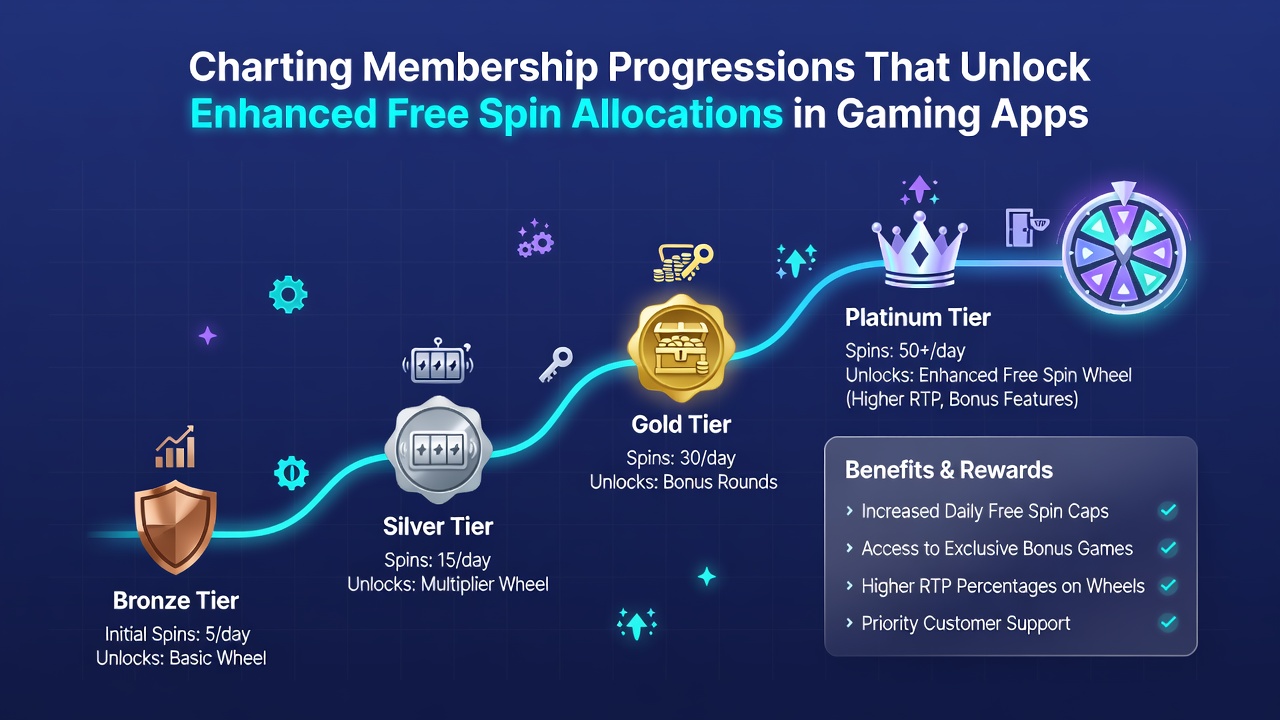
One documented case involves a mid-sized European operator that introduced a five-tier structure in late 2025; internal metrics later revealed that players reaching the top tier received an average of 180 additional spins monthly compared with entry-level accounts. Similar patterns appear in reports from the Australian Gambling Research Centre, which tracked comparable reward scaling across apps licensed in that jurisdiction.
Integration With External Data Sources and Compliance
Regulatory frameworks in several regions require operators to disclose exact progression criteria and spin allocation values before players commit funds. The European Gaming and Betting Association published updated guidelines in July 2026 that emphasize clear communication of tier requirements, leading many apps to embed progress trackers directly in user dashboards.
Academic analyses from institutions in Canada have examined how these systems influence session length, finding that visible tier counters correlate with a measurable uptick in repeat logins without altering overall spend patterns. Platforms integrate these features with secure payment gateways to ensure points post accurately across devices.
Future Adjustments Anticipated After August 2026
Market analysts tracking licensing renewals expect several jurisdictions to introduce standardized reporting templates for loyalty metrics by the end of 2026. Such templates would allow cross-platform comparisons of spin allocation efficiency, providing clearer benchmarks for participants evaluating multiple applications.
Existing data already shows that apps maintaining consistent tier communication experience higher retention rates, with point expiration policies cited as a key variable in player movement between services.
Conclusion
Membership progression mechanisms in gaming apps continue to evolve through measurable point systems that directly determine free spin quantities at each tier. Publicly available reports from regulatory bodies and research organizations supply the factual basis for understanding how these ladders function across regions, while platform disclosures keep allocation details accessible to participants. Ongoing updates scheduled after August 2026 are likely to refine transparency requirements without altering the core structure of activity-based advancement.